Power Outage Lighting Checklist for the Home
Map your dark routes, place backup lights where they matter, and test before the weather turns.
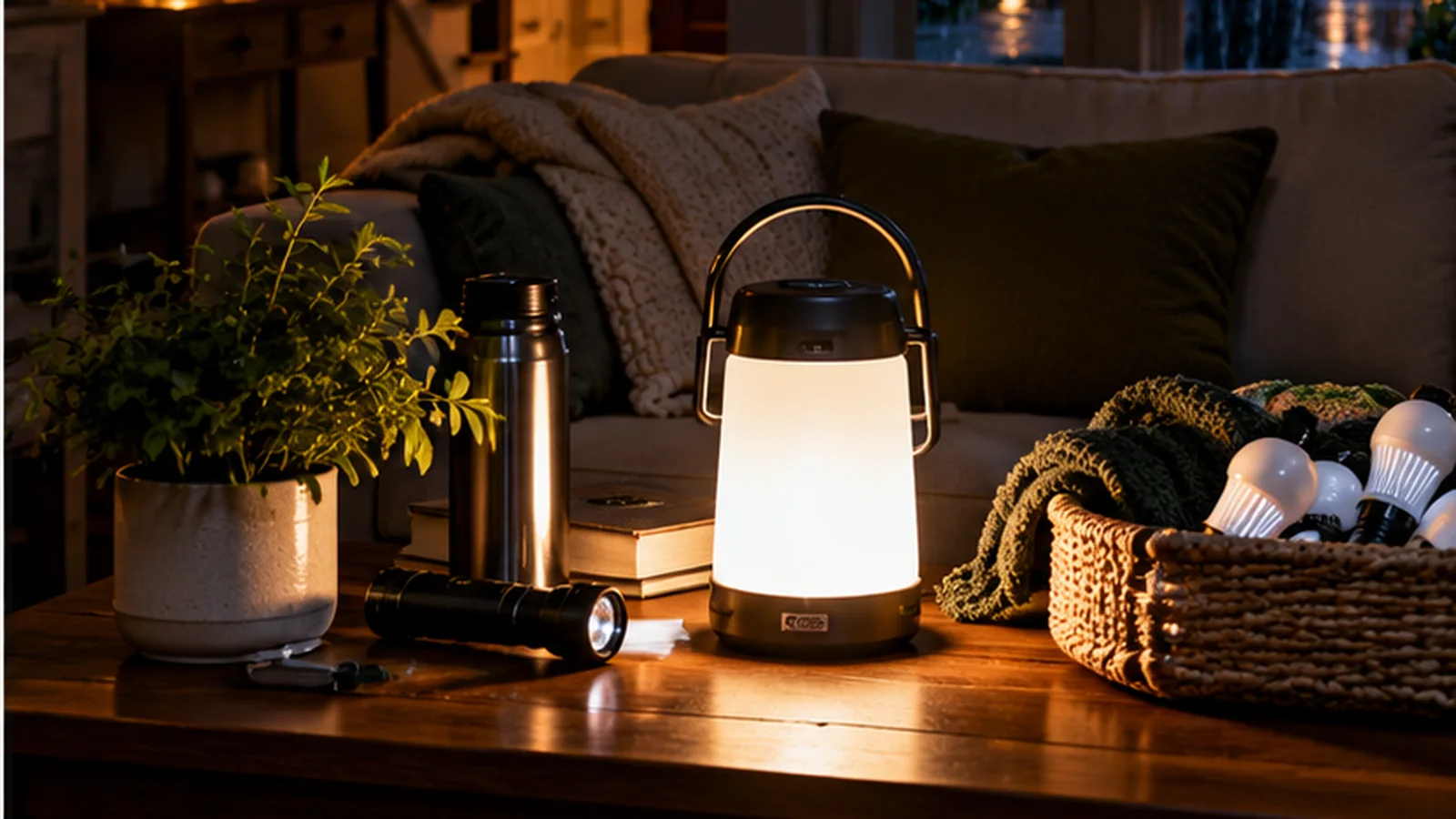
When the power fails, you need light where people move and perform essential tasks—not only in the room with the most furniture.
A sensible home power-outage lighting plan uses several independent light sources: portable flashlights or headlamps for movement, a lantern for shared spaces, and compatible fixed backup lighting where it helps. Place and test these lights before a storm or scheduled utility outage. A consumer light does not replace medical power needs or code-required emergency equipment.
Prioritize the routes people will actually use
Start with the route from bedrooms to bathrooms and main exits. Add stairs, landings, the kitchen, areas where medication is stored and any location used by someone with mobility or vision needs. The goal is practical visibility at decision points: doorway, stairs, handrails and work surfaces.
Do not assume that one bright lantern in the living room adequately lights a staircase around the corner. Position equipment where people can find it in the dark without searching cabinets or crossing cluttered rooms.
Match a light to each household job
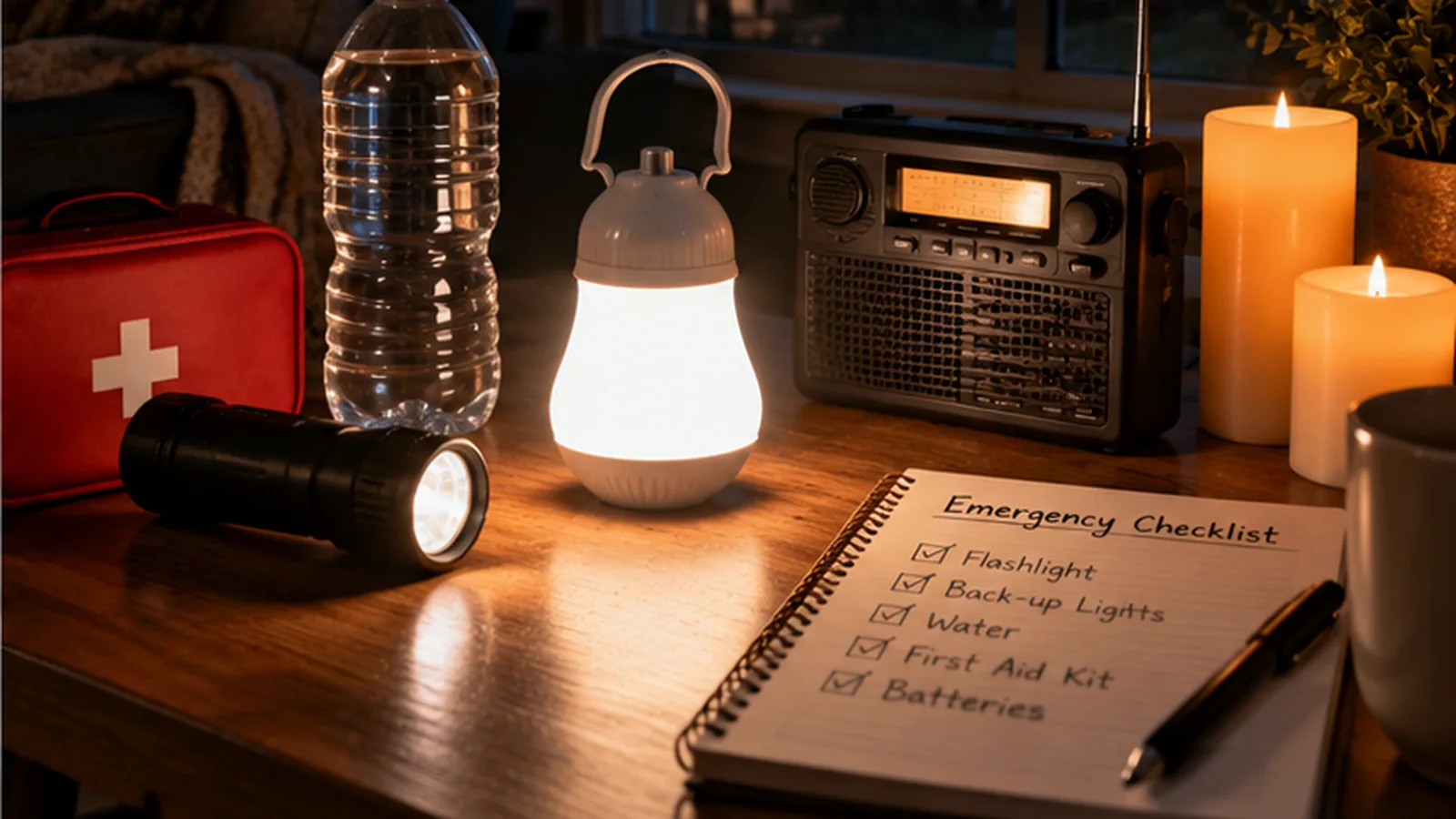
| Need | Useful lighting option | Check ahead of time |
|---|---|---|
| Moving through a dark home | Flashlight or headlamp | Accessible location, charged or fresh batteries |
| Helping another person | Headlamp / hands-free light | Comfortable fit and simple switch |
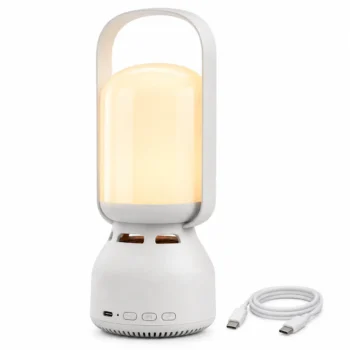
| Cooking without mains power | Battery-powered lantern | Stable position, safe task visibility |
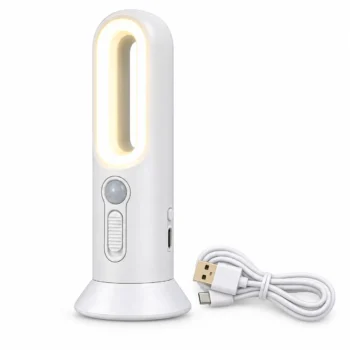
| Bathroom or hallway | Portable light or suitable backup fixture | Light reaches the path without glare |
| Extended outage | Multiple charged lights and spare batteries | Charging plan and realistic runtimes |
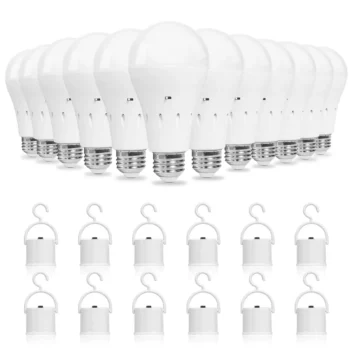
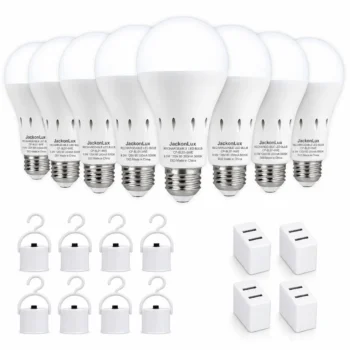
A rechargeable emergency bulb may suit a compatible fixture, but charging behavior, activation and backup time vary by model and installation. Confirm the current manufacturer’s instructions and test the exact lamp and switch combination before depending on it. See emergency lighting options for home power outages for the relevant category; availability and specifications can change.
Place the equipment before the weather changes
Store at least one flashlight where sleeping household members can reach it, one easily accessible portable light near the primary circulation route, and a shared lantern in a known household location. If children or older adults live in the home, explain where the lights are and how they operate. Keep spare batteries with compatible devices, stored as instructed by the battery maker.
For apartment dwellers, the most important areas may be the bed-to-door route and stairwell access. Building emergency systems are separate from household backup lighting; do not rely on personal lamps as substitutes for installed life-safety systems.
Run a five-minute lighting drill
A planned test reveals problems that a product box cannot tell you.
- Turn on each portable light and make sure the controls are understandable.
- Check charging status and confirm all needed cables or spare batteries are present.
- Walk the intended route under safe supervision in low light; identify unlit steps or corners.
- Test compatible automatic backup bulbs only according to the manufacturer’s safe test procedure for that fixture and circuit.
- Note any failed batteries, difficult switches, glare or inconvenient storage locations.
- Set a calendar date for the next retest, especially before severe-weather seasons in your area.
Do not work inside an electrical panel, remove outlet covers or manipulate house wiring just to simulate an outage. If testing any mains-connected device is unclear, follow the product manual or consult a qualified professional.
Protect household members with different needs
A useful plan accommodates real routines. Someone who uses mobility aids may need consistent light from bed to bathroom. A person with limited vision may benefit from distinct, controllable illumination rather than a glare-producing point source. Families with children should keep devices accessible to caregivers and explain safe handling.
Medical equipment and refrigerated medications may require a separate, clinician- or manufacturer-approved contingency plan. Ordinary rechargeable light bulbs cannot provide power to those devices.
Safe lighting during a blackout
The U.S. Fire Administration advises flashlights rather than candles during outages. If a household still uses candles for another purpose, follow fire precautions, but they are not a good primary emergency-light source. Avoid improvised wiring and do not use indoor-only lights in wet areas.
Rechargeable products are not all rated for bathrooms, outdoors or fully enclosed fixtures. Check the label and manufacturer’s instructions. If a device is swollen, unusually hot, damaged or wet, stop using it and follow local battery disposal guidance.
Printable home lighting readiness checklist
- ☐ Flashlight within reach of each regularly occupied sleeping area.
- ☐ Hands-free light for assisting household members or carrying supplies.
- ☐ Stable lantern for common-space tasks.
- ☐ Reliable light on the route to the bathroom and exits.
- ☐ Devices charged, tested and returned to their marked storage places.
- ☐ Spare batteries, charging cables and manuals in an accessible kit.
- ☐ Backup plan for children, older adults, pets and mobility needs.
- ☐ Separate plan for medical equipment or other critical electrical needs.
- ☐ Retest date recorded on the household calendar.
Frequently asked questions
How many emergency lights should a home have?
There is no single count that fits every layout. Plan by the routes and tasks people must perform, then provide independent backups if one device fails or is not charged.
Can a normal LED bulb provide backup light?
No. A standard LED bulb needs a compatible external power source. Only specially designed backup models provide battery-powered operation, subject to their stated conditions.
Is it safe to rely on phone flashlights alone?
A phone light can help briefly, but the phone also needs battery capacity for communications. A separate flashlight or headlamp is generally more practical as part of a prepared kit.
Prepare for the dark areas, not just the dark room
Walk the home, identify priority routes, choose suitable portable and compatible fixed lighting, and test before a blackout. For a room-by-room lighting plan in normal conditions, see the JackonLux home lighting guide.
Further reading: U.S. Fire Administration – Candle Fire Safety; USFA – Severe Weather Fire Safety.