Renter-Friendly
Outdoor Lighting
Without New Wiring
A little better light, without a major renovation. Thoughtful options for apartment balconies, patios and porches.
 The Balcony Edit / 01
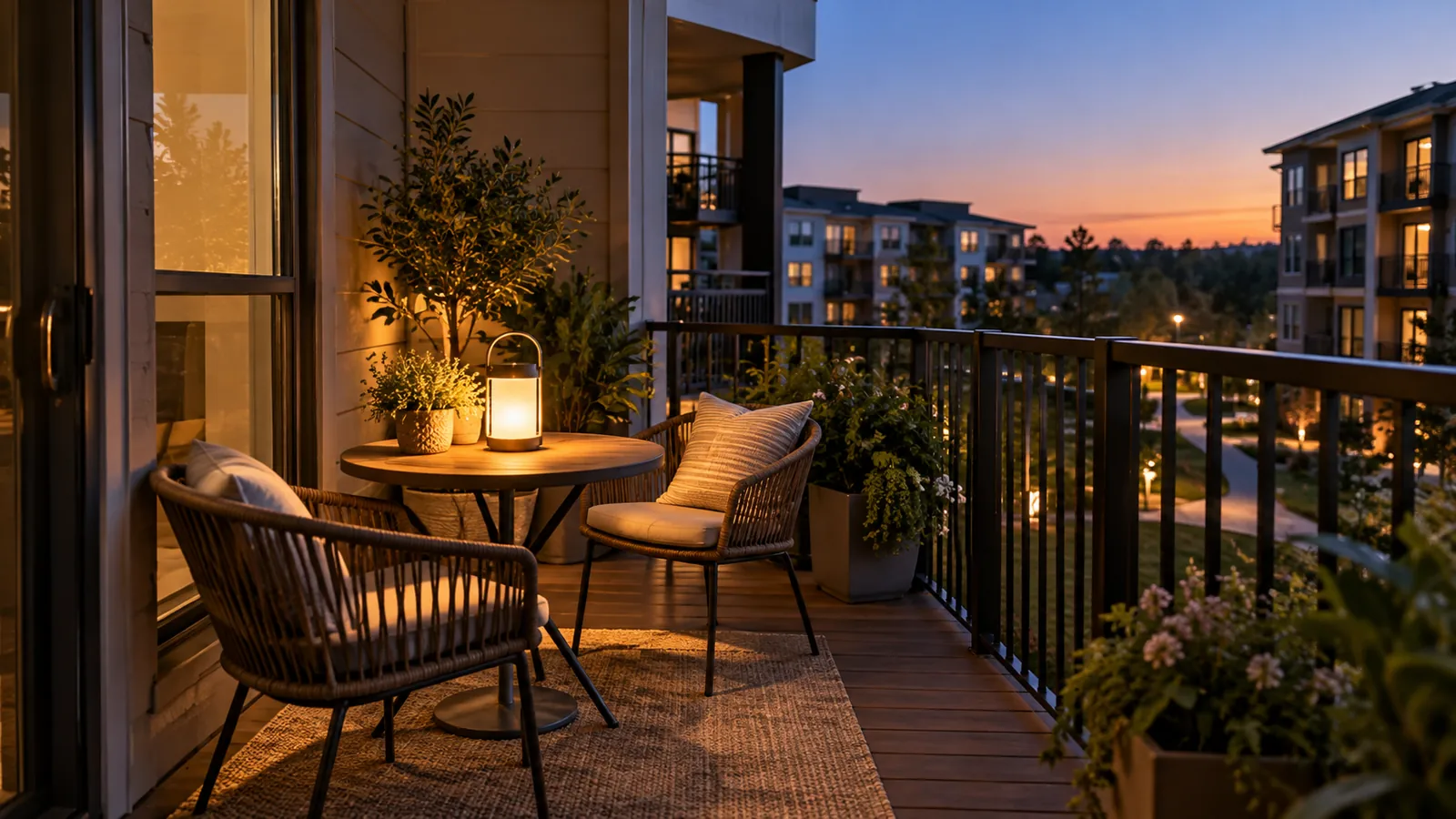
Illustrative rental balcony: a movable light near seating provides localized illumination without a permanently installed outdoor fixture.
You can improve a rented balcony, porch or patio without adding household wiring. The simplest options are movable rechargeable lanterns, freestanding solar lights and other products that do not require permanent alterations. The best choice depends on permission, weather exposure, charging access and the exact spot where you need light.
Start with a stable, portable light where you actually spend time. Move to mounted or overhead lighting only after checking your lease, weather exposure and approved installation method.
The lease comes before the light
Even a “temporary” upgrade must work for the building, not just the balcony.
“No wiring” does not automatically mean “no permission needed.” A removable item can still affect the appearance of the building, damage a finish or create a falling-object hazard. Check your lease, building handbook and any HOA or property-manager guidance before attaching anything to a wall, soffit, railing, shared fence or roof.
For an apartment balcony, pay particular attention to rules about visible lighting, railings, storage, cords, shared walkways and quiet hours. Rules differ from one property and jurisdiction to another. When the answer is unclear, ask management in writing and describe the exact proposed placement—not just the product name.
Draw a little lighting map
Find the doorway, seating spot and problem shadows before choosing a fixture.
Visit the area at dusk before shopping. Walk from the door to the table or steps, then sit where you normally relax. Notice where a shadow hides the lock, where glare reaches the neighbors and where you would naturally place or carry a lamp. You may need a focused pool of light rather than brighter lighting everywhere.
Small balcony
Start with one stable, movable light at seating height, then check glare toward neighbors.
Covered porch
Prioritize a dry-rated placement near the door. A roof alone does not guarantee dry conditions.
Shared outdoor space
Choose a setup you can bring in after use, and follow rules for common areas and paths.
| Outdoor area | Start with | Do not overlook |
|---|---|---|
| Apartment balcony | Portable table lamp for the seating area | Railings, neighbors, wind, and water exposure |
| Covered patio | Soft downlight or freestanding lamp near a table | “Covered” does not automatically mean fully dry |
| Doorway or landing | Purposeful light on the lock and step | Do not block exits or run cables across the threshold |
| Rental backyard | Freestanding solar or portable lights | Shared-space rules, pets, lawn care, stability |
| Shed or storage area | Portable task light or compatible solar unit | Seasonal use, battery access, and ventilation |
For small balconies, a single warm lamp on a table can make the seating area feel comfortable while leaving the perimeter relatively dark. On larger patios, separate the dining zone from any path or door that requires functional lighting. Do not assume decorative lighting alone adequately lights steps or access routes.
A responsible-lighting rule: use only the light you need, aim it where it helps, avoid excessive brightness and turn it off when unnecessary. Those principles align with the guidance from DarkSky International and the Illuminating Engineering Society.
Choose the power style that fits your rental
Match the light to the job: portable, solar, motion or an existing outlet.
There is no universally best light for renters. A portable lantern solves a different problem from a solar pendant or a motion-sensor fixture. Compare the work involved, not just the appearance in a product photo.
| Lighting option | Best use | Advantages | Limits / checks |
|---|---|---|---|
| Portable rechargeable lantern | Table, seating area, sheltered porch | Easy to move, no mounting or building power | Recharge indoors unless explicitly rated otherwise; verify outdoor exposure rating |
| Freestanding solar lamp | Sunlit patio or open balcony | No household wiring; flexible placement | Charging varies with sun exposure; stable base required |
| Battery motion light | Entry or short-duration task area | Light appears only when triggered, depending on model | Test sensor coverage and battery access; mount only where approved |
| Solar pendant with separate panel | Covered space with a sunny panel location | Overhead illumination without new household wiring | Approved mount, cable route and product weather rating are essential |
| Outdoor plug-in light | Patio with an existing appropriate outlet | No charging routine when safely installed | Use outdoor-rated equipment and appropriate protected receptacle; not a permanent extension-cord solution |
Rechargeable lights: the lowest-commitment starting point
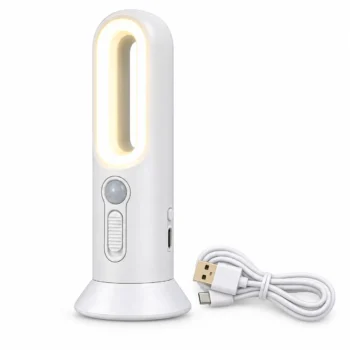
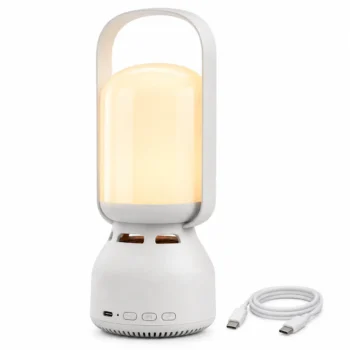
A portable rechargeable lamp is a practical choice when you cannot drill, have limited sunlight or need lighting only during occasional evenings outside. You can move it to follow the activity rather than commit to one mounting position. Check the charging method, battery care instructions and whether the actual lamp is intended for outdoor exposure. A rechargeable indoor lamp does not become weather-resistant just because it can be carried outside.
Solar lights: good when the panel actually gets sun
Solar-powered lights may avoid household wiring, but they still require adequate daylight and appropriate placement. A shaded apartment balcony or north-facing covered porch may charge poorly. Runtime also changes with the product, season, weather, settings and battery condition. For a solar pendant under a roof, a separate panel may need a different, sunnier location and a safe cable route. The deeper buying questions are covered in our solar pendant lighting guide.
The U.S. Department of Energy explains that photovoltaic cells convert sunlight into electricity. That is why panel exposure matters more than simply labeling a light “solar.”
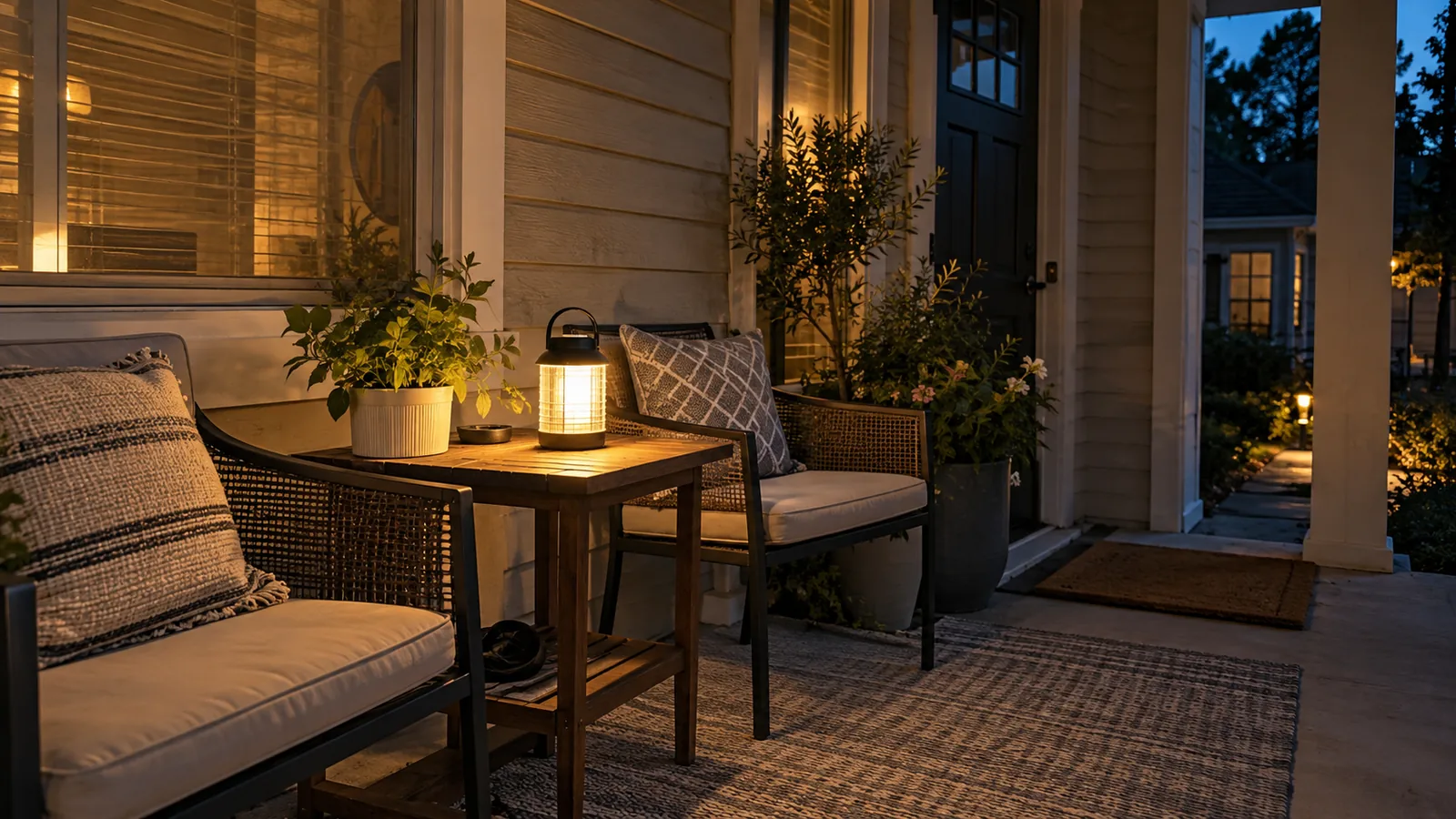
Make the corner feel lived-in.
Start with the seat, table and route to the door. A portable lamp can make a small porch feel intentional without trying to illuminate every surface.
Light the evening, not the whole neighborhood
One carefully placed warm light can feel more welcoming than a bright perimeter.
For a comfortable residential look, begin with the furniture and activity rather than a fixture catalog. On a two-person balcony, place a portable lantern on a sturdy table where it won’t be knocked over. Keep it clear of fabrics and plants according to the manufacturer’s heat and clearance instructions. On a porch, use soft, directed light to help guests see a seating area without projecting bright light into neighboring windows.
- Prefer warm-colored light where practical. DarkSky’s residential advice favors warm or amber-toned lighting, particularly when nighttime spill matters.
- Choose a stable location. A light that looks attractive in a product photo still needs a secure base, protected controls and a safe route around furniture.
- Avoid visual clutter. One or two well-placed lights usually explain the space more clearly than several conflicting sources.
- Think about neighbors. Aim away from their windows and consider timers or manual shutoff when you are finished outside.
When “removable” really means removable
Weight, wind, coatings and permission all matter—even without drilling.
Freestanding or tabletop lighting usually involves the fewest changes to the building. Clamps, straps and removable hooks can be useful only when the property permits them, the fixture manufacturer approves the method and the surface can support the load under realistic wind and weather conditions. Adhesives may fail on damp or textured surfaces, and a “removable” hook can still damage paint or coatings.
Avoid drilling into siding, window frames, railings, roof membranes or shared structures without explicit authorization. Do not assume that a railing is a safe place to suspend a heavy fixture; weight, leverage and wind can turn an apparently secure arrangement into a falling-object risk. Never route a cable where it can be pinched by a door or become a trip hazard.
Keep the pretty setup safe
Check actual outdoor-use instructions before assuming a lamp is weather-ready.
Do not use an indoor-only product or charger outdoors unless its instructions expressly permit that setting. Covered does not always mean dry: wind-driven rain, condensation and splashes may still reach fixtures. Look for the manufacturer’s stated suitable use conditions rather than assuming all LED lights are waterproof.
For plug-in outdoor lighting, use appropriately rated equipment and suitable outdoor receptacles and protection. The Electrical Safety Foundation International recommends outdoor-rated products and GFCI protection for outdoor electrical decorations. Its extension-cord guidance emphasizes that extension cords are for temporary use, not substitutes for permanent wiring. Never run a temporary cord through a closed window or door, beneath a rug, or through a wall.
If you need new outlets, hardwired fixtures or changes to household wiring, ask your landlord and use a qualified, locally licensed electrician when required. Electrical requirements vary by location in the United States and Canada.
Give your layout a three-evening trial
A short real-life check reveals practical issues that shopping photos miss.
Use a short trial to catch practical problems that daytime shopping photos hide. This is a planning suggestion, not a product-performance test.
- Evening one: position the light where you actually sit or walk; check shadows, glare and neighbor visibility.
- Evening two: check the charging routine, motion controls if present, and whether the lamp remains stable and accessible.
- Evening three: evaluate the arrangement in the normal conditions you expect it to experience, without exposing an unrated light to rain.
Periodically inspect the lamp, battery compartment, brackets and any cables according to the supplied manual. Bring portable products indoors when the instructions or upcoming weather require it. Before moving out, remove approved temporary accessories carefully and restore the area as your rental agreement requires.
Questions renters ask most
Short answers to the details worth checking before you buy.
Can I put solar lights on an apartment balcony?
Often, yes, if your building permits them and the particular light is suitable for the location. Check panel sunlight, wind stability, weather rating and railing rules. A balcony shaded most of the day may not be a good place for a solar-charged lamp.
Are adhesive or clamp-on outdoor lights always renter-friendly?
No. Reversible mounting is not automatically approved or damage-free. Adhesives, clamps and brackets must suit the actual surface, the fixture’s mounting instructions and your lease; avoid anything that could fall or damage waterproofing.
What outdoor lighting works without direct sunlight?
A rechargeable lamp that can be charged indoors is often simpler where solar exposure is poor, provided the light is used within its stated environmental rating. An existing outdoor outlet may allow other options, subject to appropriate electrical safety.
Do renters need to use outdoor-rated lights on a covered porch?
Follow the specific manufacturer’s environmental-use instructions. A roof may reduce direct rain, but moisture and weather can still reach the light. Never assume an indoor-rated fixture is suitable simply because the space has a cover.
Start with the space, then choose the light
A good rental lighting upgrade is easy to use, appropriate for its environment and manageable when you eventually move. For a small balcony, start with a portable lamp; for a covered dining space, first determine whether overhead mounting and solar-panel placement are actually workable.